

Choosing the Right Video Wall: A Guide to Pixel Pitch, Bezel Size, and Display Technology
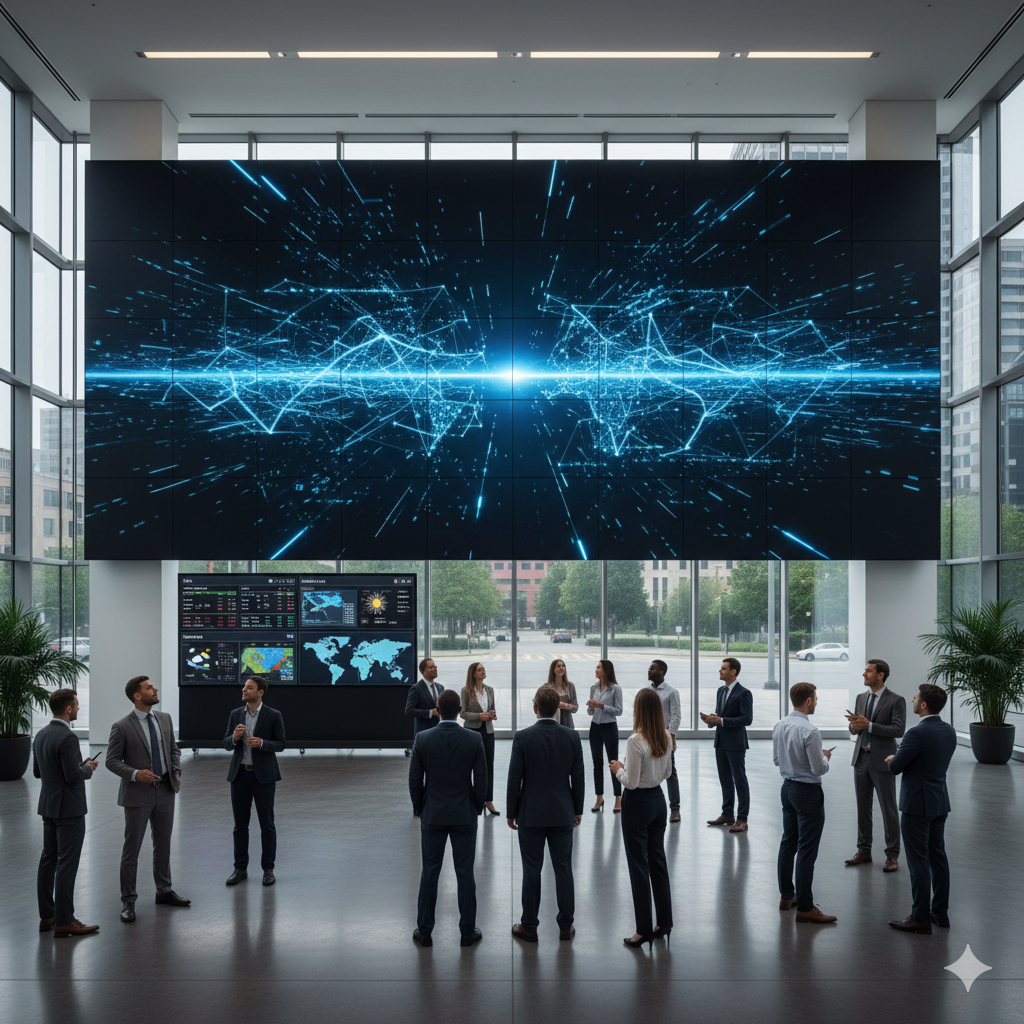
Video walls are more than just large screens; they are dynamic canvases that transform spaces, captivate audiences, and deliver powerful visual messages. From bustling retail environments and corporate lobbies to mission-critical control rooms and immersive entertainment venues, a well-chosen video wall can elevate your brand and operational efficiency.
However, with the rapid advancements in display technology, understanding the technical specifications is key to making an informed investment. At Audio-Video Group, we guide our clients through this complexity, ensuring the final solution perfectly matches their application and viewing experience.
Let’s break down the essential factors:
1. Pixel Pitch: The Clarity of Your Message
What it is: Pixel pitch refers to the distance (in millimeters, mm) between the centers of two adjacent pixels on an LED display. For LCD video walls, it refers to the pixel density of each individual panel.
Why it matters:
-
The Smaller the Pitch, the Sharper the Image: A smaller pixel pitch means more pixels are packed into a given area, resulting in higher resolution and a smoother, more detailed image.
-
Viewing Distance is Crucial: This is the most critical factor. If viewers are very close to the screen, a small pixel pitch (e.g., 0.9mm – 2.5mm for LED) is essential to avoid seeing individual pixels (pixelation). For distant viewers, a larger pixel pitch (e.g., 4mm – 10mm for LED) can be sufficient and more cost-effective.
AVG’s Rule of Thumb: A common formula is Viewing Distance (in feet) = Pixel Pitch (in mm) x 8-10. For example, if your primary viewing distance is 10 feet, you’d want a pixel pitch of approximately 1.0mm – 1.25mm for optimal clarity. We use sophisticated calculations to pinpoint the ideal pitch for your specific environment.
2. Bezel Size: The Seamlessness of Your Vision
What it is: Bezel size refers to the thickness of the border around individual displays that make up an LCD video wall.
Why it matters:
-
Impact on Visual Cohesion: Thicker bezels create visible lines (or “seams”) across your video wall, breaking the illusion of a single, continuous image. Ultra-narrow bezels (UNB), often less than 1mm, create a near-seamless experience.
-
LED vs. LCD: This is primarily a concern for LCD video walls. LED video walls are inherently “bezel-free” because they are constructed from individual modules that fit together seamlessly.
Consider this: If your content is dynamic, fast-moving, or requires absolute visual continuity (e.g., a single large image or video), minimizing the bezel size on an LCD wall is paramount. For displaying multiple discrete information feeds, slight bezels might be less distracting.
3. Display Technology: LED vs. LCD
Each technology offers distinct advantages:
a) LCD Video Walls (Liquid Crystal Display)
-
How it works: Multiple individual LCD panels are tiled together to create a larger display.
-
Pros:
-
High Resolution: Excellent image quality for close viewing, especially for detailed graphics and text.
-
Cost-Effective: Generally more affordable for comparable screen sizes than fine-pitch LED.
-
Brightness & Color: Good color reproduction and brightness suitable for indoor environments.
-
-
Cons:
-
Bezels: Even ultra-narrow bezels create faint lines.
-
Size Limitations: Can be more complex to scale to extremely large, non-standard shapes.
-
-
Best For: Control rooms, conference rooms, lobbies with moderate ambient light, retail environments where budget and high resolution are key, and viewing distances are medium to close.
b) LED Video Walls (Light Emitting Diode)
-
How it works: Composed of countless tiny LED emitters that directly produce light and color, arranged into modules that tile together.
-
Pros:
-
Seamless: No bezels, creating a truly continuous, immersive image.
-
Scalability: Highly flexible in size and shape; can be curved or cut into unique designs.
-
Brightness & Contrast: Unmatched brightness and contrast, making them ideal for high-ambient light environments (e.g., outdoor displays, sunlit lobbies).
-
Lifespan: Generally robust and long-lasting.
-
-
Cons:
-
Cost: Fine-pitch LED can be a significant investment, especially for very high-resolution indoor applications.
-
Viewing Distance: Ultra-fine pixel pitches are required for very close viewing to avoid pixelation.
-
-
Best For: Outdoor signage, large auditoriums, concert venues, broadcast studios, high-impact corporate lobbies, experiential marketing, and any application requiring ultimate brightness and a truly seamless visual.
Partner with Audio-Video Group
Choosing the right video wall isn’t a one-size-fits-all decision. It requires a deep understanding of your space, content, audience, and budget. At Audio-Video Group, our experts collaborate with you to analyze these factors, ensuring you invest in a solution that delivers maximum impact and value.
Ready to bring your vision to life on a grand scale? Contact Audio-Video Group today for a consultation, and let’s design a video wall that truly stands out.